Used iVCS3 for iOS?


iVCS3 Analysis

AI Assisted Content ·

Not written by CNET Staff.

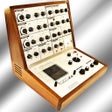
iVCS3 serves as the official emulator of the iconic EMS VCS3 synthesizer, originally launched inThis software replicates the unique characteristics of the VCS3, which was the first portable synthesizer available commercially. It features three oscillators, a noise generator, and a variety of modulation options, making it a versatile tool for music production. Additionally, it incorporates a joystick controller and a patch matrix for flexible sound design, appealing to both novice and experienced users in music composition and sound experimentation.

The application captures the essence of the original hardware, allowing users to recreate classic sounds associated with prominent artists and bands of the progressive rock era. The inclusion of a voltage-controlled low pass filter and spring reverb unit further enhances its capabilities. Designed for musicians and electronic music enthusiasts, iVCS3 provides an authentic experience of vintage synthesis, enabling creativity and exploration in sound generation.


Enlarged image for iVCS3
iVCS3 0/1

Used iVCS3 for iOS?


Explore More


Full Specifications

GENERAL
Release
Latest update
Version
3.6.2
OPERATING SYSTEMS
Platform
iOS
Operating System
iOS 16.4
POPULARITY
Total Downloads
8
Downloads Last Week
0

Report Software

Last Updated


Developer’s Description

iVCS3. Official EMS VCS3 emulator. The VCS3 was created in 1969 by Peter Zinovieff's EMS company. The electronics were largely designed by David...
iVCS3. Official EMS VCS3 emulator. The VCS3 was created in 1969 by Peter Zinovieff's EMS company. The electronics were largely designed by David Cockerell and the machine's distinctive visual appearance was the work of electronic composer Tristram Cary. The VCS3 was more or less the first portable commercially available synthesizer--portable in the sense that the VCS 3 was housed entirely in a small, wooden case. The VCS3 was quite popular among progressive rock bands and was used on recordings by The Alan Parsons Project, Jean Michel Jarre, Hawkwind, Brian Eno (with Roxy Music), King Crimson, The Who, Gong, and Pink Floyd, among many others. Well-known examples of its use are on The Who track "Won't Get Fooled Again" (as an external sound processor, in this case with Pete Townshend running the signal of a Lowrey Organ through the VCS3's filter and low frequency oscillators) on Who's Next. Pink Floyd's "On the Run" (from The Dark Side of the Moon) made use of its oscillators, filter and noise generator, as well as the sequencer. Their song Welcome to the Machine also used the VCS3. The bassy throb at the beginning of the recording formed the foundation of the song, with the other parts being recorded in response. The VCS3 was also a staple at the BBC's Radiophonic Workshop, and was a regular (and most frightening) sound generator for the Dr Who TV series. Many fo the monsters and atmoshere;s created for the show came directly from the VCS3. Description. The VCS3 has three oscillators (in reality, the first 2 oscillators are normal oscillators and the 3rd an LFO or Low Frequency Oscillator), a noise generator, two input amplifiers, a ring modulator, a 18dB/octave (pre-1974) or 24dB/octave (after 1974) voltage controlled low pass filter (VCF), a trapezoid envelope generator, joy-stick controller, voltage controlled spring reverb unit and 2 stereo output amplifiers. Unlike most modular synthesizer systems which use cables to link components together, the VCS3 uses a distinctive patch board matrix into which pins are inserted in order to connect its components together. Keyboards controller. DK1 keyboard controller. Although the VCS3 is often used for generating sound effects due to lack of built-in keyboard, there were external keyboard controllers for melodic play. The DK1 in 1969 was an early velocity sensitive monophonic keyboard for VCS3 with an extra VCO and VCA. Later it was extended for duophonic play, as DK2, in 1972. Also in 1972, Synthi AKS was released, and its digital sequencer with a touch-sensitive flat keyboard, KS sequencer, and its mechanical keyboard version, DKS, were also released. (See: en. wikipedia.org/wiki/VCS3).

Download.com
Your review for iVCS3
Download.com

AI Assisted Content Disclosure

Content created and reviewed by Softonic with information obtained from apeSoft, using AI.

CNET's editorial team was not involved in the creation of this content. Opinions, analysis and reviews were not provided by CNET.