Used The War Disorder Hexa for Windows?
Editors’ Review
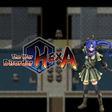
The War Disorder Hexa unfolds intersecting campaigns that trace Node's collapse through soldiers, commanders, and civilians, presenting the war from multiple human viewpoints. Ikebukuro DPC's Windows adventure frames political and military choices without supernatural powers. It uses branching narratives and short, focused segments rather than open-world exploration, with narrative choices that alter campaign outcomes. Aimed at fans of tactical RPGs and adventure titles who want mature, character-driven stories and repeat playthroughs.
What kind of game is it?
In this game, narrative and role-playing form the primary loop. Players take control of six distinct protagonists, each with individual storylines, gameplay styles, and objectives that overlap across campaigns. The design blends tactical encounters with adventure sequences, and decisions in one campaign can change later scenarios, producing several possible conclusions. The structure breaks the larger war into short, self-contained chapters that interlock into a wider narrative.
Does it have multiplayer and how are campaigns delivered?
Across campaigns, the experience emphasizes solo play and repeat runs. Campaigns present discrete, focused segments, and the title includes a New Game Plus mode that carries over progress such as levels and equipment into later playthroughs. Save data can synchronize through Steam Cloud for cross-device continuation. Material about cooperative or competitive multiplayer is not part of the available feature set.
What does the game look and sound like?
In this game the presentation leans toward gritty, human-scale drama rather than spectacle: writing and scenario drive atmosphere more than supernatural spectacle. The low-fantasy setting centers on military struggle and political intrigue, shaping a sober audio and visual tone. On the technical side, the game targets Windows 8, 8.1, and 10 and requires a processor of at least 2 GHz, which sets modest performance expectations for typical desktop hardware.
How replayable is it and what drives return play?
Return play comes from multiple endings and a structure designed for repeated runs: short, impactful campaigns let players test different choices across characters. Progress can carry between playthroughs so players can explore alternate outcomes with carried-over levels and equipment. Because narratives overlap, a single decision can alter later missions from another perspective, which drives curiosity to replay campaigns and see how events shift under different approaches.
Pros
- Distinct protagonists with individual storylines and gameplay styles
- Interconnected campaigns where choices affect other characters' circumstances
- Progress carries over between playthroughs
- Steam Cloud save support for cross-device continuity
Cons
- Low-fantasy, no-magic focus limits appeal to high-fantasy players
- Mixed early-user reception highlights its niche mechanics and tone
- Windows-only release restricts availability on other platforms
Bottom Line
Final recommendation
The game rewards players who seek tightly written, character-driven wartime narratives and deliberate decision-making, and it favors repeat playthroughs. However, its narrow, realistic tone and Windows-only availability limit its appeal for those seeking high-fantasy spectacle or cross-platform options. For players who prioritize moral conflict and overlapping campaigns, the title offers a distinct narrative experience worth trying today.
Used The War Disorder Hexa for Windows?