Used Razerwire:Nanowars for Mac?
Editors’ Review
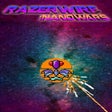
Razerwire:Nanowars from Hammer & Ravens is a Mac action title that reimagines 1980s arcade combat by replacing shooting with precision wire control. Players maneuver a monomolecular filament to protect generators, surviving endless, escalating waves while earning resources. Key elements include rogue-lite permanent upgrades, boss encounters, customizable 'Old TV' and 'Arcade' visual filters, and both mouse and controller input. The game targets retro arcade fans, bullet-hell players, and indie gamers who enjoy short high-score runs.
What kind of game is it?
In this game, arcade action centers on spatial control rather than projectile aiming. Enemy formations arrive in dense, patterned waves that force quick pathing decisions. Combat depends on sliding the filament through enemy trajectories to interrupt hits on your generators. The loop mixes short, tense runs with escalating difficulty and boss gates, encouraging repeated attempts to refine timing and movement rather than memorizing static spawn points.
How do modes and mechanics shape each run?
Inside the action, runs behave like compact roguelike sessions: survive waves, reach bosses, and collect resources that persist between attempts. The progression grants permanent unlocks that change equipment and filament behavior, letting players experiment with different builds. The game lists global leaderboards and achievements to reward score-focused play. Sessions emphasize short-term survival tactics and long-term incremental growth across multiple attempts.
What does the game look and sound like?
Here, neon and synth textures recreate an 80s arcade atmosphere through stylized visual filters and a synth-heavy soundtrack. Filters labeled 'Old TV' and 'Arcade' alter color and scanline effects, making each run feel visually distinct. Sound design pairs driving electronic beats with wave pacing. The heads-up display keeps generator status and score visible without clutter, which helps when multiple enemy types overlap on-screen.
Is it hard to get started?
Starting matches reward basic spatial control but escalate quickly into dense patterns that demand precise movement. The original design favored mouse precision, and although controller input is supported, joystick play changes how you trace enemy paths. Boss encounters introduce new attack rhythms that test reaction and positioning. The game suits players who prefer skill-based practice and short sessions rather than lengthy narrative onboarding.
Pros
- Wire-based combat replaces projectile shooting
- Rogue-lite permanent unlocks reward repeated runs
- Retro filters and synth soundtrack enhance atmosphere
- Supports both mouse and controller input
Cons
- Design favors mouse precision despite controller support
- High-intensity waves require precise timing and movement
- Score-focused loop may not satisfy narrative seekers
Bottom Line
A focused pick for score-driven arcade fans
The game is an energetic choice for players who enjoy short, high-tension runs and skill-based practice; however, its emphasis on repeated survival and score competition reduces appeal for those seeking narrative campaigns. Players who enjoy incremental skill progression get steady payoff across sessions, so it rewards those who like refining precise inputs and chasing leaderboard positions.