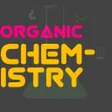
Used ORGANIC CHEMISTRY - BOOK FOR IIT JEE & NEET for Android?


ORGANIC CHEMISTRY - BOOK FOR IIT JEE & NEET Analysis

AI Assisted Content ·

Not written by CNET Staff.

The ORGANIC CHEMISTRY - BOOK FOR IIT JEE & NEET app is a free educational tool designed for Android users, focusing on the intricate study of organic chemistry. This application serves as an invaluable resource for students preparing for competitive examinations like IIT JEE and NEET. It encompasses a wide range of topics from fundamental concepts to complex reactions and synthesis of organic compounds. Users will find detailed chapters covering various aspects of organic chemistry, including stereochemistry, thermodynamics, kinetics, and electron delocalization, making it suitable for in-depth study or quick revision.

Top Recommended Alternative

The app is structured into multiple sections, each dedicated to specific themes in organic chemistry. It addresses key areas such as carbon-carbon double and triple bonds, the behavior of electron-withdrawing groups, and the characteristics of carbonyl compounds. Furthermore, it introduces essential concepts like NMR spectroscopy and provides insights into the reactions involving alcohols, ethers, and organometallic compounds. This comprehensive approach ensures that students have access to both theoretical knowledge and practical applications, facilitating a thorough understanding of organic chemistry.

Enlarged image for ORGANIC CHEMISTRY - BOOK …
ORGANIC CHEMISTRY - BOOK FOR IIT JEE & NEET 0/4

Used ORGANIC CHEMISTRY - BOOK FOR IIT JEE & NEET for Android?


Explore More

Full Specifications

GENERAL
Release
Latest update
Version
7.0.6
OPERATING SYSTEMS
Platform
Android
Operating System
Android 13.0
POPULARITY
Total Downloads
91
Downloads Last Week
1

Report Software

Last Updated


Developer’s Description

An Introduction to the Study of Organic Chemistry...

An Introduction to the Study of Organic Chemistry

Part-1: The first three chapters of this text cover a variety of topics that you need to be familiar with in order to start a study of the reactions and synthesis of organic compounds.

Electrophilic Addition Reactions, Stereochemistry, and Electron Delocalization

Part-2 discusses the reactions of compounds whose functional group is a carboncarbon double bond or a carboncarbon triple bond. Part-2 also examines stereochemistry, thermodynamics and kinetics, and electron delocalization.

Substitution and Elimination Reactions

Part 3 ( Chapters 9, 10 , and 11) discuss the reactions of compounds that have an electron-withdrawing atom or groupa potential leaving groupbonded to an sp carbon.

Part 3 ( Chapter 12) introduces you to organometallic compounds, a class of nucleophiles that can participate in substitution reactions.

Part 3 ( Chapter 13) discusses the reactions of alkanes, which are compounds that do not have a leaving group but that can undergo a substitution reaction under extreme conditions.

Identification of Organic Compounds

Part-4: In Chapter 14 you will learn about mass spectrometry, infrared spectroscopy, and UV/Vis spectroscopy.

Chapter 15 discusses nuclear magnetic resonance (NMR) spectroscopy , which provides information about the carbonhydrogen framework of an organic compound.

Carbonyl Compounds

Part 5 focus on the reactions of compounds that contain a carbonyl group.

Aromatic Compounds

Part 6 discuss the reactions of aromatic compounds. In Chapter 8, you learned about the structure of benzene, the most common aromatic compound, and why it is classified as aromatic.

Bioorganic Compounds DNA

Part-7: Chapters 21 through 26 discuss the chemistry of bioorganic compoundsorganic compounds found in living systems.

Special Topics in Organic Chemistry

Chapter 27 discusses polymers synthesized by chemists. Chapter 28 discusses pericyclic reactions. In this chapter, you will learn how the conservation of orbital symmetry theory explains the relationships between the reactant, the product, and the reaction conditions in a pericyclic reaction.

Contents of the App

1 Electronic Structure and Bonding

2 Acids and Bases: Central to Understanding Organic Chemistry

3 An Introduction to Organic Compounds

4 Isomers: The Arrangement of Atoms in Space

5 Alkenes: Structure, Nomenclature, and an Introduction to Reactivity

6 The Stereochemistry of Addition Reactions

7 An Introduction to Multistep Synthesis

8 Delocalized Electrons and Their Effect on Stability

9 Substitution Reactions of Alkyl Halides

10 Elimination Reactions of Alkyl Halides

11 Reactions of Alcohols, Ethers, Epoxides, Amines, and Thiols

12 Organometallic Compounds

13 Radicals

14 Mass, Infrared, and Ultraviolet/ Visible Spectroscopy

15 NMR Spectroscopy

16 Reactions of Carboxylic Acids and Carboxylic Derivatives

17 Reactions of Aldehydes and Ketones

18 Reactions at the a- Carbon of Carbonyl Compounds

19 Reactions of Benzene and Substituted Benzenes

20 More About Amines

21 The Organic Chemistry of Carbohydrates

22 The Organic Chemistry of Amino Acids, Peptides, and Proteins

23 Catalysis in Organic Reaction and in Enzymatic Reactions

24 The Organic Chemistry of the Coenzymes

25 The Organic Chemistry of the Metabolic Pathways

26 The Chemistry of the Nucleic Acids

27 Synthetic Polymers

28 Pericyclic Reactions

Topic Covered in each chapter

DETAILED EXPLANATION OF THEORY

SOME IMPORTANT THINGS TO REMEMBER

SUMMARY OF REACTIONS

PROBLEMS WITH SOLUTIONS

PRACTICE TEST WITH SOLUTIONS


Download.com
Your review for ORGANIC CHEMISTRY - BOOK FOR IIT JEE & NEET
Download.com

AI Assisted Content Disclosure

Content created and reviewed by Softonic with information obtained from RK Technologies, using AI.

CNET's editorial team was not involved in the creation of this content. Opinions, analysis and reviews were not provided by CNET.