Used Checkers Twist for Mac?
Editors’ Review
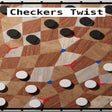
Matches take place on irregular, procedurally generated layouts that alter board geometry each game, forcing tactical calculation instead of memorized openings. Guillaume Fradin, the developer, adapts Draughts into a strategy title for Mac and other Apple devices. The app pairs a single-player mode with an improving AI, a local pass-and-play two-player option, mandatory capture rules, and multiple visual themes. It suits board game fans and casual players seeking classic rules reframed by unpredictable boards.
What kind of game is Checkers?
It reworks Draughts into a spatial puzzle where board topology changes the available moves and neighbor relationships. The fundamental rules remain, including mandatory capture, yet the irregular layouts make traditional openings unreliable and emphasize calculation over pattern recall. Matches feel like short tactical skirmishes: each move shifts local geometry and can create unexpected capture chains that players must spot on the fly.
Does it have a multiplayer mode?
The title supports local two-player pass-and-play on a single device and a single-player mode against a challenging AI bot, which the developer tuned across multiple difficulty levels. Human-versus-human games compress social interaction into the shared screen space, while solo practice lets you measure situational judgment against the bot's scaled challenges. Those two modes set up distinct sessions: quick head-to-head turns or focused practice against rising difficulty.
What does the game look and sound like?
Visual design opts for minimal, polished themes labeled Wood, Minimalist, and Muted, which keep attention on piece placement. The interface is clean and distraction-free, designed for modern Apple displays, and scales across Mac, iPhone, iPad, and Apple Vision Pro. The presentation keeps UI elements sparse, with clear tile contrast and unadorned pieces so the board's unusual geometry reads at a glance.
Is it hard to get started?
The learning curve centers on adapting to changing board shapes and the mandatory capture rule, which together raise the value of immediate tactical reading. Mastery comes from repeated play and pattern recognition across varied layouts. Replayability comes from the procedural boards: players face new neighbor configurations each session, which keeps short matches fresh and practice-focused.
Pros
- Procedurally generated layouts force fresh tactical choices each session
- Mandatory capture preserves classic Draughts decision pressure
- Single-player AI with multiple difficulty settings for solo practice
Cons
- Requires an Apple M1 chip or later for the Mac version
- Shifts tactical focus away from fixed-grid opening study
Bottom Line
In summary, who benefits from this variant?
In summary, the game is a deliberate, tactical variant for players who enjoy on-the-spot calculation and short, repeatable matches. Fans of classic Draughts who want to test situational judgement against an improving AI or a local opponent get the clearest gain. Players seeking to study fixed-grid openings may find the shifting layouts frustrating, making the game more suited to those who prefer adaptive tactics.